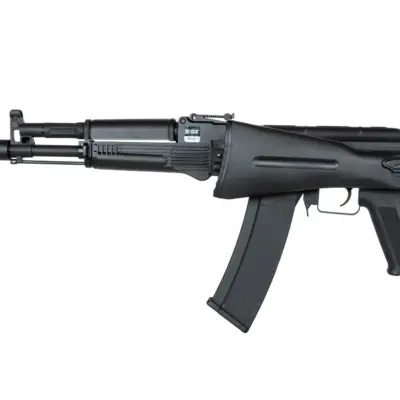
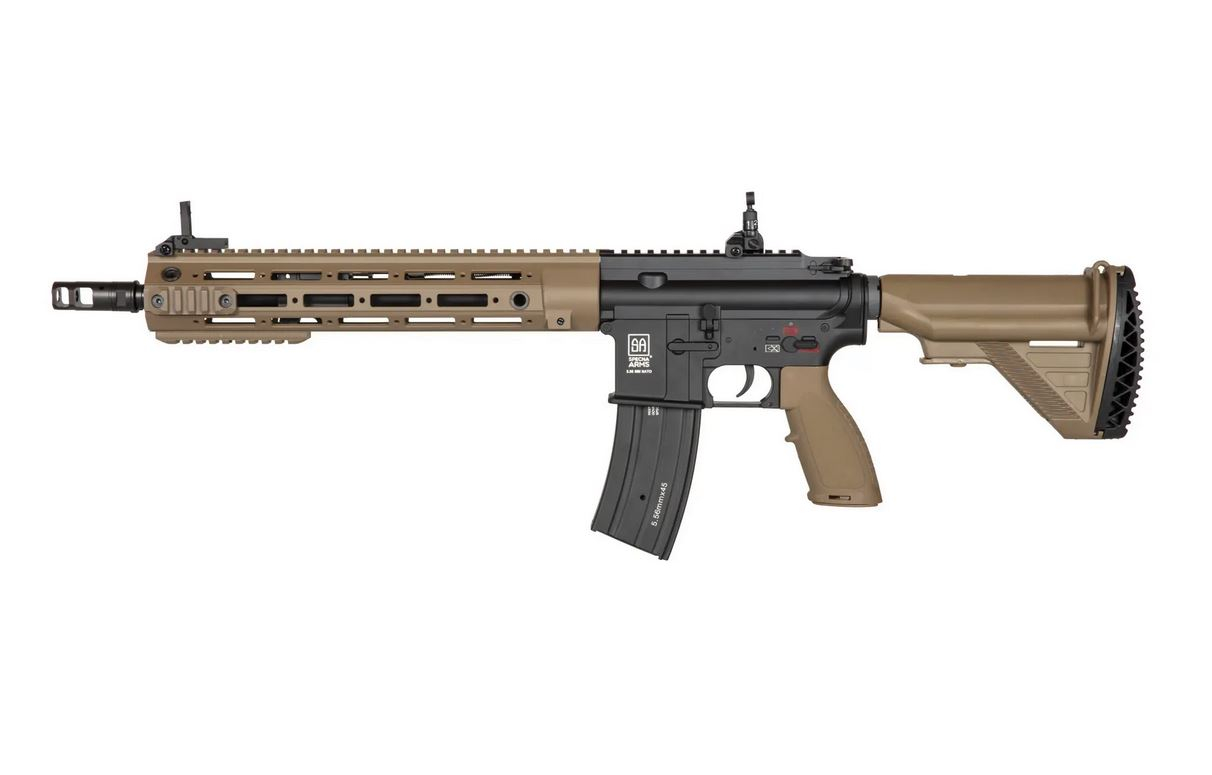
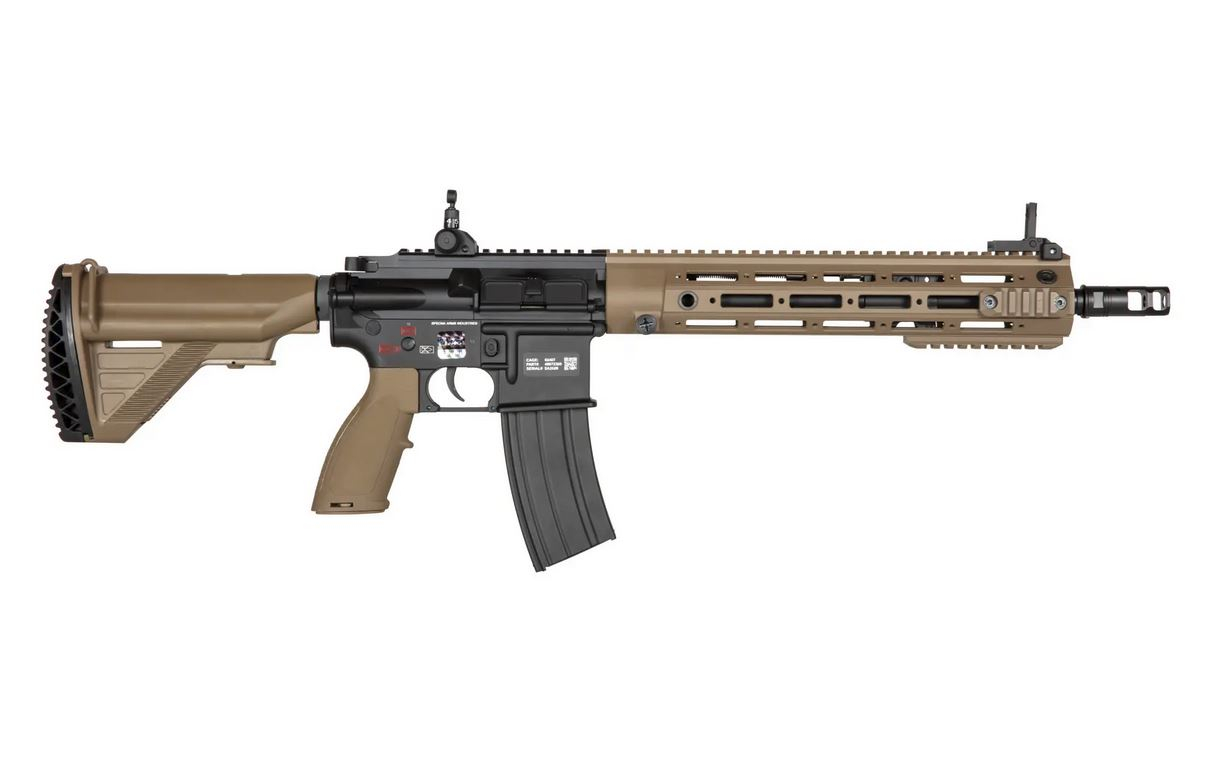
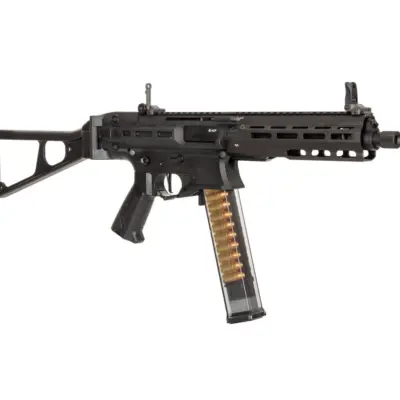
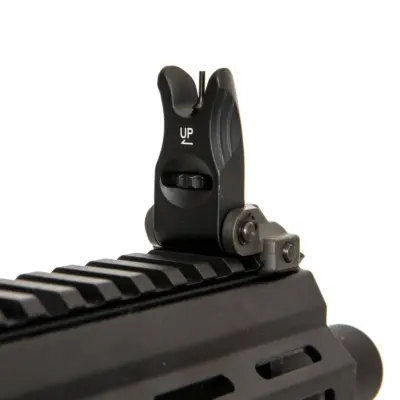
SA 416 Carbine SMR 13.5″ (SA-H09 ONE(TM)) – Black/Tan
🛒 Produkt na zamówienie
Czas realizacji: 7–10 dni roboczych
1.899,99 zł
Pozostało tylko: 1


Opis
<h5>HK 416 Assault Rifle</h5>
<p><strong>HK416</strong> is an assault rifle developed by the German company <strong>Heckler a Koch</strong>. The development of the weapon began in the 1990s with the aim of creating a rifle that would provide <strong>higher reliability and accuracy than the then-American M4</strong>. The result was the <strong>HK416</strong>, which combines several key innovations. In 2004, the <strong>HK416</strong> was first introduced to the public. The weapon quickly became popular due to its <strong>gas system derived from the HK G36</strong>, which ensured higher reliability.<br /><strong>In 2006, the first version of the HK416 was put into service</strong>, having been tested and used by special forces around the world. <strong>In 2007, American special forces <a href=”https://kamaradsvyhodami.cz/en/dictionary/navy-seals” target=”_blank”>SEAL</a> began using the HK416</strong>, further enhancing its reputation. In 2008, the <strong>HK416</strong> became the main assault rifle of the <strong>French RAID unit</strong> and other special forces. Throughout 2010-2020, the <strong>HK416</strong> was adopted by various armed and police forces worldwide.<br /><strong>The HK416 is a standard model</strong> offering robust and reliable construction with interchangeable barrels of different lengths (10.4″, 14.5″, 16.5″, 20″). This model features the standard gas system of <strong>Heckler a Koch</strong>.<br /><strong>The HK416C</strong> is a compact version designed <strong>with a shorter barrel and a telescopic stock</strong>, making it ideal for operations in confined spaces such as vehicles or urban environments.<br /><strong>The HK416A5</strong> is a <strong>modernized version</strong> of the original HK416, introduced in 2012. Improvements include a redesigned gas system, better ergonomics, and greater modularity.<br />The current use of the HK416 and its variants is widespread, including military and police units around the world. The weapon is valued for its reliability, accuracy, and modulari..
Podobne produkty
3,99 zł
3,99 zł
3,99 zł